Full-featured
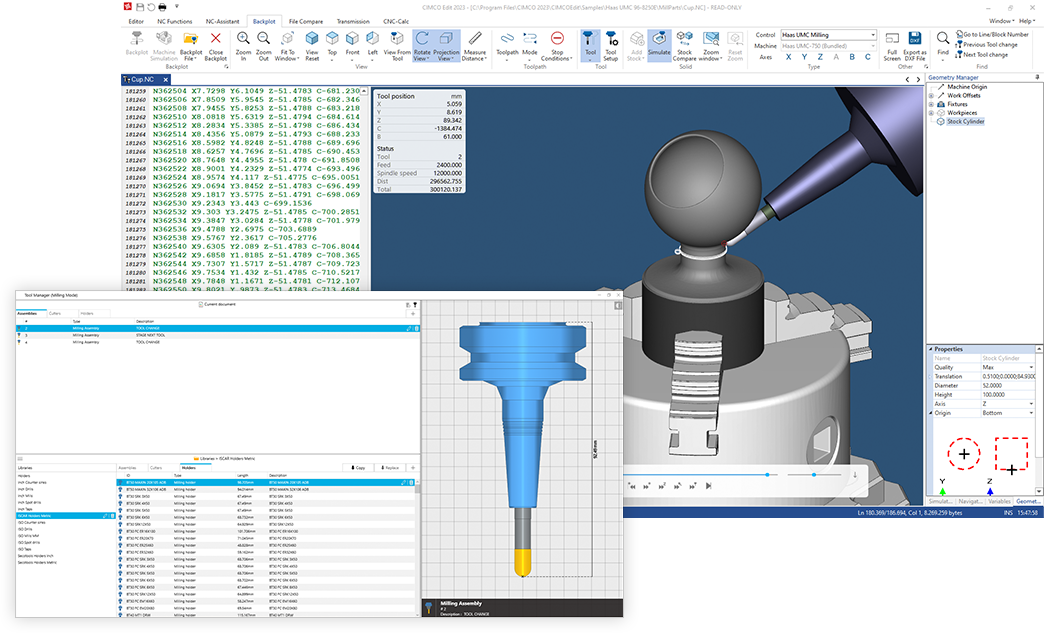
CIMCO Edit comes with all the essential features needed for modern NC program editing including NC specific functions, math, transforms, drag/drop editing and more.
In addition, CIMCO Edit includes file compare, mill/turn backplotter, advanced Tool Manager, NC code assistant and offers powerful add-ons for machine simulation, program management, 2D CAD/CAM, and more.

Request a call / demo
Have one of our experts contact you for a one-on-one web presentation or Q&A.

Find local reseller
Our resellers provide the highest level of service to customers in their local language and time zone.

get started today
Most of our software products can be downloaded and evaluated free for 30 days.