

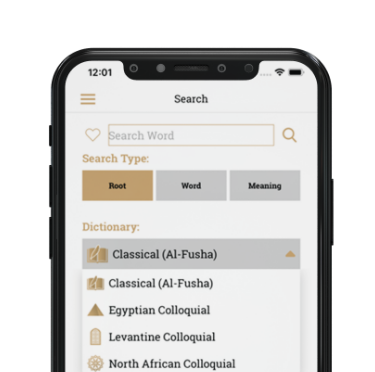
Want to take The Living Arabic Project's dictionaries wherever you go? Download the mobile app Lughatuna! It costs a little bit, but purchasing it supports the project so more cool dictionaries and new features can be added.


This site is always growing. What started out as a simple word list on a student’s desktop has evolved into two of the largest dialect dictionaries ever written for the Egyptian and Levantine dialects with plans for additional dialects and a growing Classical Arabic (Fusha) dictionary, all run on a uniquely structured database designed for Arabic’s diglossia. To make it practical and accessible, there are apps and learning resources appropriate for all levels of users.
The most practical application of Match Color is the rescue of . Imagine a wedding photographer who shoots hundreds of frames under changing weather—some under harsh noon sun, some in deep shade, and others under incandescent reception lights. The resulting set will look jarringly disjointed. By using a single "hero" image with the desired white balance and contrast as the source, the photographer can apply Match Color to the remaining images in a matter of seconds. While not a replacement for manual grading, this feature provides an astonishingly accurate starting point, aligning the temperature and tint of disparate shots. It solves the problem that plagues every outdoor shooter: how to make 3 PM look like 2 PM across a two-hour window.
A common mistake among beginners is applying Match Color globally to the entire canvas. In compositing, color matching is often required only for specific elements (e.g., a person cut out from a different photo).
Achieving perfect color harmony between two different images is the hallmark of a professional photo compositor. Whether you are placing a subject into a new background or blending multiple elements into a single scene, mismatched lighting and color casts are the quickest ways to ruin the illusion. This guide explores the most effective techniques for using Photoshop to match color perfectly every time. The Fundamentals of Color Matching
Arabic is hard and complex, but also rich and deep. Imagine learning tools that map out Arabic for you and help you learn it. That’s what this site is. It has dictionaries for Egyptian, Levantine, and Classical Arabic, and it has apps and learning resources to help you access the language.
These dictionaries are more than just a list of words, they are guides to the Arabic language. The uniquely structured database allows users to search by Arabic word, English word, and Arabic root. There are also thousands of examples to show users how to properly use words and listing common phrases and proverbs.
The most practical application of Match Color is the rescue of . Imagine a wedding photographer who shoots hundreds of frames under changing weather—some under harsh noon sun, some in deep shade, and others under incandescent reception lights. The resulting set will look jarringly disjointed. By using a single "hero" image with the desired white balance and contrast as the source, the photographer can apply Match Color to the remaining images in a matter of seconds. While not a replacement for manual grading, this feature provides an astonishingly accurate starting point, aligning the temperature and tint of disparate shots. It solves the problem that plagues every outdoor shooter: how to make 3 PM look like 2 PM across a two-hour window.
A common mistake among beginners is applying Match Color globally to the entire canvas. In compositing, color matching is often required only for specific elements (e.g., a person cut out from a different photo).
Achieving perfect color harmony between two different images is the hallmark of a professional photo compositor. Whether you are placing a subject into a new background or blending multiple elements into a single scene, mismatched lighting and color casts are the quickest ways to ruin the illusion. This guide explores the most effective techniques for using Photoshop to match color perfectly every time. The Fundamentals of Color Matching
Do you have questions or comments?
Feel free to reach out through Contact us page.
