Fambaré Ouattara Natchaba Better Site

However, while he was travelling abroad, the military prevented his plane from landing in Lomé and quickly installed the late president's son, , in his place. This move was widely condemned internationally as a coup d'état. Natchaba eventually returned to Togo and later served as a special envoy for the government. Personal Life and Legacy

Ultimately, the story of Faberé Ouattara Natchaba is a sobering essay on the vulnerability of law to force. It shows that a constitution is not a self-enforcing contract; it requires human guardians willing to sacrifice their positions to defend it. Natchaba was that guardian for a fleeting moment in February 2005. His example compels us to ask a difficult question of every political crisis: When the moment comes to choose between legality and loyalty, who among our leaders will have the courage to remain on the plane, even if it is not allowed to land? fambaré ouattara natchaba

Following the transition, Natchaba remained active within the RPT but was effectively sidelined from the center of power. He continued to serve as a Deputy in the National Assembly, representing his constituency in the Kara region. However, while he was travelling abroad, the military

He is generally viewed as a technocrat and a loyalist who prioritized regime stability and personal safety over strict constitutional adherence during a critical moment of national crisis. Personal Life and Legacy Ultimately, the story of

: He served in this role from 1992 to 1994, managing Togo's international relations.

Natchaba is perhaps most noted for being the intended successor during the 2005 political crisis. According to the constitution at the time, as President of the National Assembly, he should have become upon the death of Gnassingbé Eyadéma on 5 February 2005.

Natchaba was a staunch ally of President Gnassingbé Eyadéma, the long-time ruler of Togo. His loyalty and legal expertise propelled him through the ranks of the RPT. Before assuming the highest legislative office, Natchaba served in various ministerial capacities. Notably, he served as the and later as the Minister of Foreign Affairs from 1996 to 1998.
Command line utility

A cross-platform console application that can export and decompile Source 2 resources similar to the main application.

ValveResourceFormat

.NET library that powers Source 2 Viewer (S2V), also known as VRF. This library can be used to open and extract Source 2 resource files programmatically.

ValveResourceFormat.Renderer

.NET library providing an OpenGL-based rendering engine for Source 2 assets. Standalone rendering of models, maps, particles, animations, lighting, and materials with physically-based rendering (PBR).

ValvePak

.NET library to read Valve Pak (VPK) archives. VPK files are uncompressed archives used to package game content. This library allows you to read and extract files out of these paks.

ValveKeyValue

.NET library to read and write files in Valve key value format. This library aims to be fully compatible with Valve's various implementations of KeyValues format parsing.

C#
// Open package and read a file
using var package = new Package();
package.Read("pak01_dir.vpk");

var packageEntry = package.FindEntry("textures/debug.vtex_c");
package.ReadEntry(packageEntry, out var rawFile);

// Read file as a resource
using var ms = new MemoryStream(rawFile);
using var resource = new Resource();
resource.Read(ms);

Debug.Assert(resource.ResourceType == ResourceType.Texture);

// Get a png from the texture
var texture = (Texture)resource.DataBlock;
using var bitmap = texture.GenerateBitmap();
var png = TextureExtract.ToPngImage(bitmap);

File.WriteAllBytes("image.png", png);
View API documentation
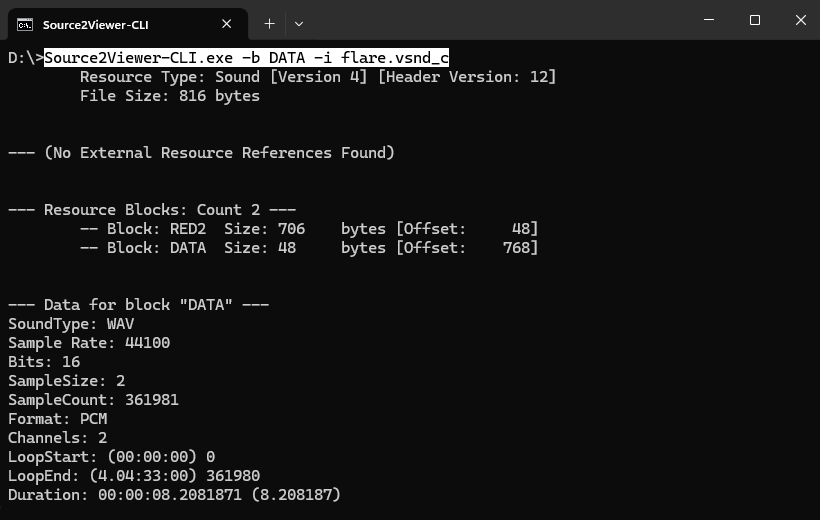
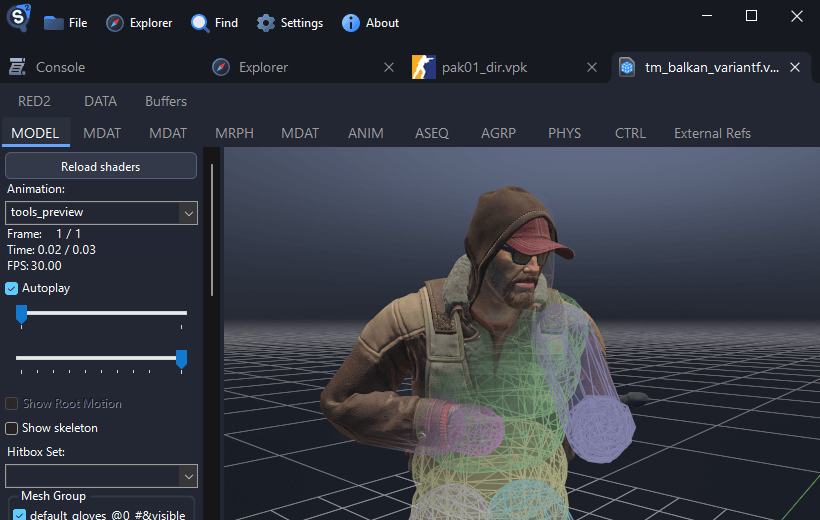
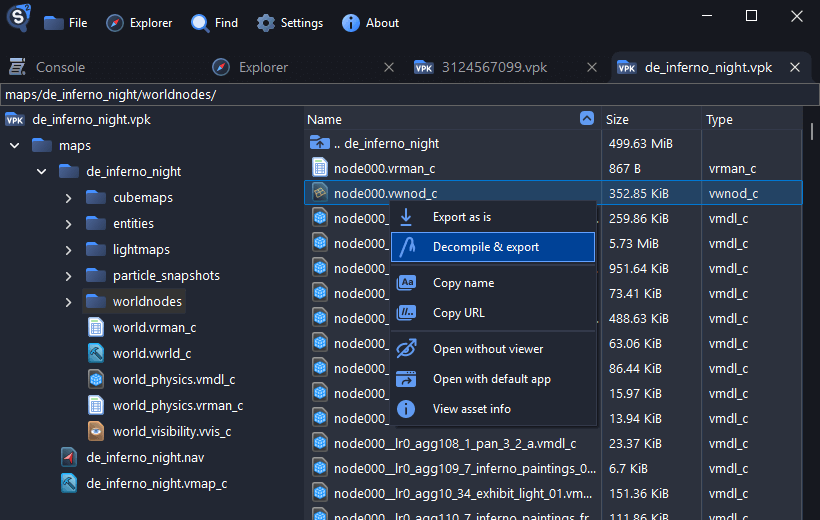
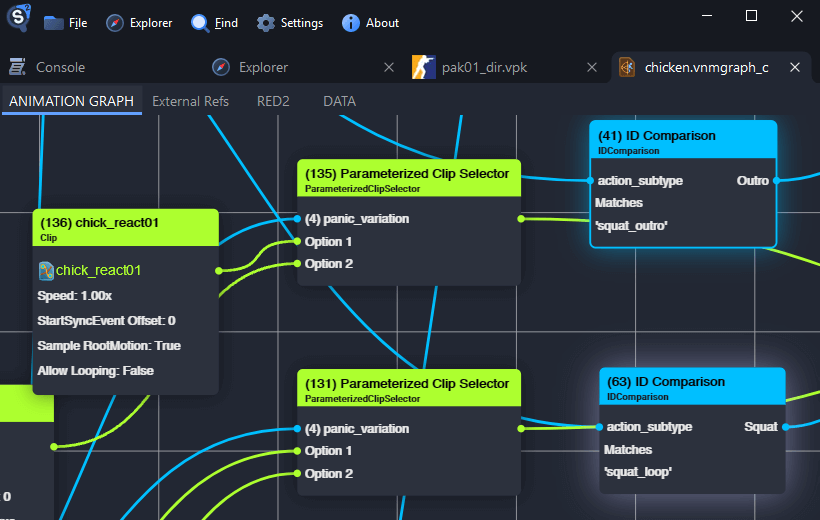
Screenshot of the 3D renderer displaying a Counter-Strike 2 player model on a grid Screenshot showing the VPK package explorer interface with a file tree and a list view Screenshot of the animation graph viewer showing nodes Screenshot of the command line interface showing DATA block for an audio file

However, while he was travelling abroad, the military prevented his plane from landing in Lomé and quickly installed the late president's son, , in his place. This move was widely condemned internationally as a coup d'état. Natchaba eventually returned to Togo and later served as a special envoy for the government. Personal Life and Legacy

Ultimately, the story of Faberé Ouattara Natchaba is a sobering essay on the vulnerability of law to force. It shows that a constitution is not a self-enforcing contract; it requires human guardians willing to sacrifice their positions to defend it. Natchaba was that guardian for a fleeting moment in February 2005. His example compels us to ask a difficult question of every political crisis: When the moment comes to choose between legality and loyalty, who among our leaders will have the courage to remain on the plane, even if it is not allowed to land?

Following the transition, Natchaba remained active within the RPT but was effectively sidelined from the center of power. He continued to serve as a Deputy in the National Assembly, representing his constituency in the Kara region.

He is generally viewed as a technocrat and a loyalist who prioritized regime stability and personal safety over strict constitutional adherence during a critical moment of national crisis.

: He served in this role from 1992 to 1994, managing Togo's international relations.

Natchaba is perhaps most noted for being the intended successor during the 2005 political crisis. According to the constitution at the time, as President of the National Assembly, he should have become upon the death of Gnassingbé Eyadéma on 5 February 2005.

Natchaba was a staunch ally of President Gnassingbé Eyadéma, the long-time ruler of Togo. His loyalty and legal expertise propelled him through the ranks of the RPT. Before assuming the highest legislative office, Natchaba served in various ministerial capacities. Notably, he served as the and later as the Minister of Foreign Affairs from 1996 to 1998.
Changelog

Made possible by amazing people

Source 2 Viewer is open-source and built by volunteers. Every contribution helps make it better for everyone.